
A Story of Kinship, Trauma, and the Meaning of Belonging

Every child deserves to feel safe, loved, and connected. But what happens when a child finally finds safety, and it feels more frightening than the chaos they left behind?
November is National Adoption Month, a time to celebrate families, recognize children and youth waiting for permanency, and reflect on what it truly means to belong. We often picture adoption through its happiest moments. A judge's gavel falls. A family gathers for a photograph. A child has a permanent place to call home.
Those moments matter. They deserve to be celebrated.
But the story doesn't end when a child walks through the front door of a safe home. In many ways, that is where another chapter begins.
I know this because I was once a child who needed somewhere safe to land.
And when I finally found it, I cried and rebelled because everything felt wrong.
The Little Girl Who Knew How to Survive
I was in fifth grade when things started to look like they might be getting better.
My mom, stepdad, and I had recently moved into a two-bedroom duplex. For the first time in my life, I had a bedroom of my own. Before that, my bed had been in the living room of our one-bedroom apartment.
It wasn't perfect. Things were still scary. But for a little while, they seemed to be looking up.
Then one Friday afternoon, my mom picked me up from the elementary school I had attended since kindergarten and casually told me something along the lines of, "I hope you said goodbye to your friends, because today was your last day."
That was it.
No warning. No explanation. No opportunity to say goodbye.
I simply never went back.
About five years later, I saw one of those childhood friends at a light-rail station. She was heavily pregnant and had a bruise on her face.
And I hid.
I ducked behind a sign because I didn't want her to see me. Part of me was afraid for her. Another part of me wondered whether seeing someone from that earlier chapter of her life might somehow make things worse.
I still think about her sometimes.
I wonder what happened to her. I wonder if she found safety. I wonder whether she, too, had learned that sometimes surviving means becoming invisible.
About two months after starting my new school, my mother went on an alcohol-induced bender.
A social worker came to school and wanted me to leave with her. We already had a history with social services, so her presence wasn't entirely unfamiliar.
I refused. And she left.
The next day, I told a new friend what was happening at home. She asked me if I was okay and for whatever reason, that day I didn't pretend.
I said no.
My mom, when drinking, was usually passed out when I came home from school. My stepdad disappeared when she drank because he was angry with her. Home existed, technically. But there wasn't really anyone there.
My friend asked if I wanted to come to her house after school and stay the night.
I said yes.
I knew my mother probably wouldn't even notice I hadn't come home.

One night became another. Eventually, somehow, it became about two weeks.
Her parents fed me home-cooked meals. I went to school every day. They were kind to me.
They even bought me a bed.
For a little while, I landed somewhere soft.
Looking back as an adult, I have questions I never thought to ask as a child. Why didn't anyone call social services? How did two adults simply accept that this little girl had essentially moved into their home?
It could have gone terribly wrong.
Instead, I was fortunate enough to find people who cared about a child who needed somewhere to land.
Eventually, the adults caught up with me.
The social worker had returned to our house and couldn't locate my mother. She couldn't find me either. Family members were contacted and somehow discovered where I had been staying.
I remember coming "home" from school and learning that my grandfather was coming to get me that evening.

My friend and I immediately developed what we believed was a brilliant plan.
We immediately practiced our flutes together in her bedroom.
Somehow, we thought that if my grandfather saw how happy I was, how normal everything looked, maybe he would let me stay.
Her parents even offered.
But my grandfather, being the wonderful grandfather he was, said no.
I needed to be with my family.
I cried.
A lot.
And then I went to live with my aunt, uncle, and two cousins.
They weren't strangers.
But they didn't really know me, and I didn't really know them.
When Safety Feels Like Losing Everything
I remember walking into their house and immediately feeling like I couldn't touch anything.
I didn't know where things belonged. I didn't know the routines. I didn't know the rules.
Once again, I was somewhere unfamiliar, surrounded by people who knew pieces of my story without really knowing me. And the strange thing was, I didn't think what had happened at home was particularly remarkable.
It was my life. It was normal. It was what it was.

That first night, I took a shower. Of everything that happened during that time, the shower is what I remember most clearly.
I cried quietly because I didn't want anyone to hear me. To ask questions The water sprayed differently. There was hard-water buildup on the showerhead, and the water didn't hit my back the way it did at home. The shampoo wasn't mine. Its smell reminded me of a happy memory I still can't completely access. I just remember that whatever the memory was, it made me feel even sadder.
Eventually, the water turned cold. I got out and wrapped myself in a towel. Even the towel felt wrong. Too rough. Too scratchy.
Not mine.
And there I was, standing in a home where adults were awake, responsible, and willing to care for me. Yet somehow, I felt emptier than I had when I walked home from school and found my mother lying on the floor, too drunk to open her eyes. For years, I couldn't understand that.
Why would I feel worse somewhere safer?
Why wasn't I relieved?
Why didn't safety feel safe?
What I Understand Now That I Couldn't Understand Then
As an adult, I see that little girl differently.
At home with my mother, life was chaotic. But I knew the chaos, I knew how to survive there. I knew how to forge my mother's initials when school paperwork needed to be signed. I knew how to call the doctor's office. I knew how to cook. I knew how to take care of my animals. I knew how to look at my mother and determine what kind of night it was going to be.
Those aren't skills a fifth grader should need. But they were skills. And they gave me something incredibly important.
Control.
Then, almost overnight, that control disappeared. New home. New adults. New expectations. New smells. New routines.
Even a new towel.
Everything the adults around me understood as "better" for me felt completely unfamiliar. And unfamiliar felt dangerous. I wasn't rejecting my aunt and uncle. I wasn't ungrateful that someone had opened their home to me. I was a child who had spent years learning how to survive in one environment, suddenly expected to feel comfortable in another. I needed safety.
But I also needed time to learn what safety felt like. And that distinction matters more than we sometimes realize.
What My Story Has to Do With National Adoption Month
My experience was one of kinship care, not adoption. Those experiences are different, and each deserves to be understood on its own terms.
But children entering kinship care, foster care, and adoptive families may share something important: the experience of leaving behind a world they understand, even when that world has caused them harm.
During National Adoption Month, we celebrate the lifelong connections adoption can create. We also recognize that children bring their histories with them.
Their memories don't disappear when their circumstances improve.
Their love for their birth families doesn't necessarily disappear because another family steps forward. Their fear doesn't disappear because someone tells them they're safe.
And their healing doesn't begin on a schedule that adults can control. For some children, safety comes with relief. For others, it comes with grief, confusion, fear, or a complicated mixture of feelings they cannot yet explain. Sometimes all of those emotions exist at once.
A child can be grateful for the family caring for them and still grieve the family or home they left behind.
That doesn't mean the new family has failed. It means the child's story didn't begin the day they arrived.
The Numbers Tell Us Who Is Waiting. The Stories Tell Us Why It Matters.
Across the United States, children and youth continue to wait for permanent family connections. Federal foster care data for fiscal year 2025 identified 67,249 children with a permanency plan of adoption. But numbers alone cannot tell us what those children have experienced. They cannot describe what it feels like to change schools without saying goodbye. They cannot explain why a child might hide food, struggle with transitions, test boundaries, or become upset by something an adult considers insignificant. They cannot capture the ache of missing a parent who was unable to provide consistent care. They cannot describe how an unfamiliar shower, a different shampoo, or a scratchy towel can suddenly make a child feel completely alone.
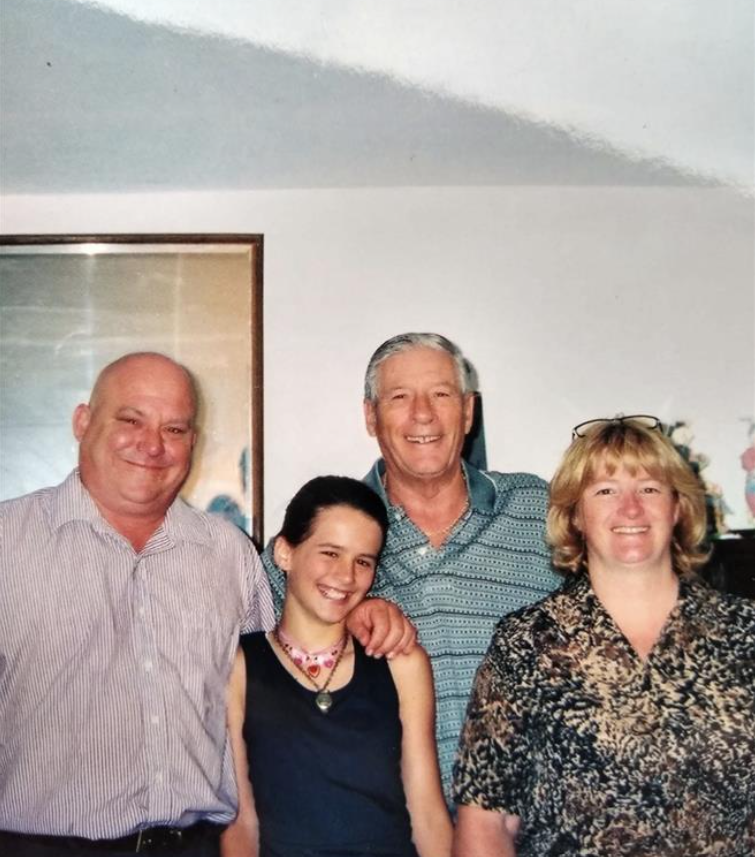
I was never a statistic to the people who knew me.
I was a little girl who played the flute. A little girl with animals she loved. A little girl who wanted her mother to be okay. I was also a little girl who had learned to survive things she didn't have the words to explain.
Every child waiting for a permanent connection has a story just as individual.
And every one of those stories deserves to be heard.
Behavior Is Communication. But Are We Listening?
A child who refuses to unpack may not be trying to be difficult. A child who insists on doing everything independently may have learned that depending on adults isn't always safe. A child who becomes upset over a change in routine may be responding to years of unpredictability. And a child who seems uncomfortable receiving affection may still be learning whether that affection can be trusted.
Not every behavior has the same explanation, and no two children experience trauma in exactly the same way. But our response can begin with curiosity rather than judgment.
Instead of immediately asking, "How do we stop this behavior?" we can ask, "What might this child be trying to communicate?" Instead of asking, "Why aren't they grateful?" we can ask, "What have they had to learn to survive?" and instead of expecting trust simply because we have provided safety, we can recognize that trust develops through repeated experiences of consistency, patience, and connection.
This is especially important for adoptive and kinship caregivers, who may be offering a child stability while also navigating behaviors and emotions they weren't prepared to encounter.
Love matters tremendously. But love also needs understanding, support, and the willingness to keep showing up when things are hard.
This November, Let's Celebrate More Than a Moment
National Adoption Month gives us an opportunity to celebrate families and recognize children and youth who are still waiting for permanent connections.

But I hope we also use this month to think about what happens after the celebration.
After the courthouse photographs.
After the welcome-home signs.
After the excitement settles and real life begins.
Because belonging is not created in a single moment.
It develops through ordinary days, familiar routines, patience, and relationships that make room for a child's entire story.
The next time a child struggles in a place we know is safe, perhaps we can resist the urge to ask why they aren't happier.
Perhaps we can ask a different question.
"What did this child have to learn to survive before they got here?"
And, just as importantly:
"What can I do today to help them learn that they don't have to survive alone anymore?"
At Parent Cooperative Community, we believe every family deserves connection, understanding, and support. This National Adoption Month, we invite our community to look beyond the moment of adoption and recognize the lifelong journey of building trust, belonging, and lasting family relationships.
Author's Note: This article shares my personal experience growing up in kinship care. It reflects my own memories and understanding of those experiences, which may differ from those of other children and families. I share it in the hope that it encourages greater empathy, conversation, and understanding.
Data reference: U.S. Children's Bureau, AFCARS, FY 2025