Understanding the Window of Tolerance for Adoptive Families
If you have ever watched your child move from calm to chaos in a matter of seconds, or shrink into silence when something seemed perfectly fine to you, you have witnessed the nervous system in action. For adoptive families, learning how the nervous system responds to stress is one of the most useful frameworks available. At the center of that learning sits a concept called the window of tolerance. It offers a clear, compassionate way to understand what is happening in your child's body and how to respond with skill rather than alarm.
This post breaks down the window of tolerance in plain language, explores why it is particularly relevant for adopted children, and offers practical strategies adoptive families can use to widen that window over time.
What Is the Window of Tolerance
The window of tolerance is a concept developed by clinical researchers to describe the zone in which a person can think clearly, feel emotions without being overwhelmed, and respond to life's demands with flexibility. When someone is inside their window, they can learn, connect, play, problem-solve, and recover from setbacks. Their body feels reasonably safe, and their brain has access to the higher-order skills that support relationships and growth.
When stress pushes a person outside their window, two patterns can emerge. The first is hyperarousal, a state of fight or flight where the nervous system revs up. The second is hypoarousal, a state of freeze or collapse where the nervous system shuts down. Both are protective responses, not character flaws, and both look very different from the outside. For caregivers, recognizing which state your child is in changes everything about how you respond.
Why Adopted Children Often Have a Narrower Window
Every person has a window of tolerance, and the size of that window is shaped by early experiences, genetics, and relationships. For children who have experienced disruption, loss, neglect, or instability in their earliest years, the window often forms more narrowly. Their nervous systems learned, very young, that the world could be unpredictable. As a result, they may move into hyperarousal or hypoarousal more quickly and stay there longer than children with steadier early environments.
This is not a defect. It is an adaptation. The same nervous system that fires up at small triggers once helped a child survive circumstances no child should have to navigate. Understanding this reframes "difficult behavior" as nervous system communication, a perspective explored deeply in our resource on understanding trauma triggers in adopted children. When caregivers respond to dysregulation as information rather than misbehavior, the path forward becomes clearer.
How to Spot Hyperarousal and Hypoarousal
Learning to read your child's state in real time is one of the most powerful skills an adoptive parent can develop. The signs are not always obvious, especially in children who have learned to mask their distress, but patterns emerge with practice.
Here is what each state often looks like:
Hyperarousal signs: rapid speech, raised voice, clenched fists, pacing, aggression, panic, racing thoughts, hypervigilance, difficulty sitting still, sudden defiance, or an inability to follow simple directions.
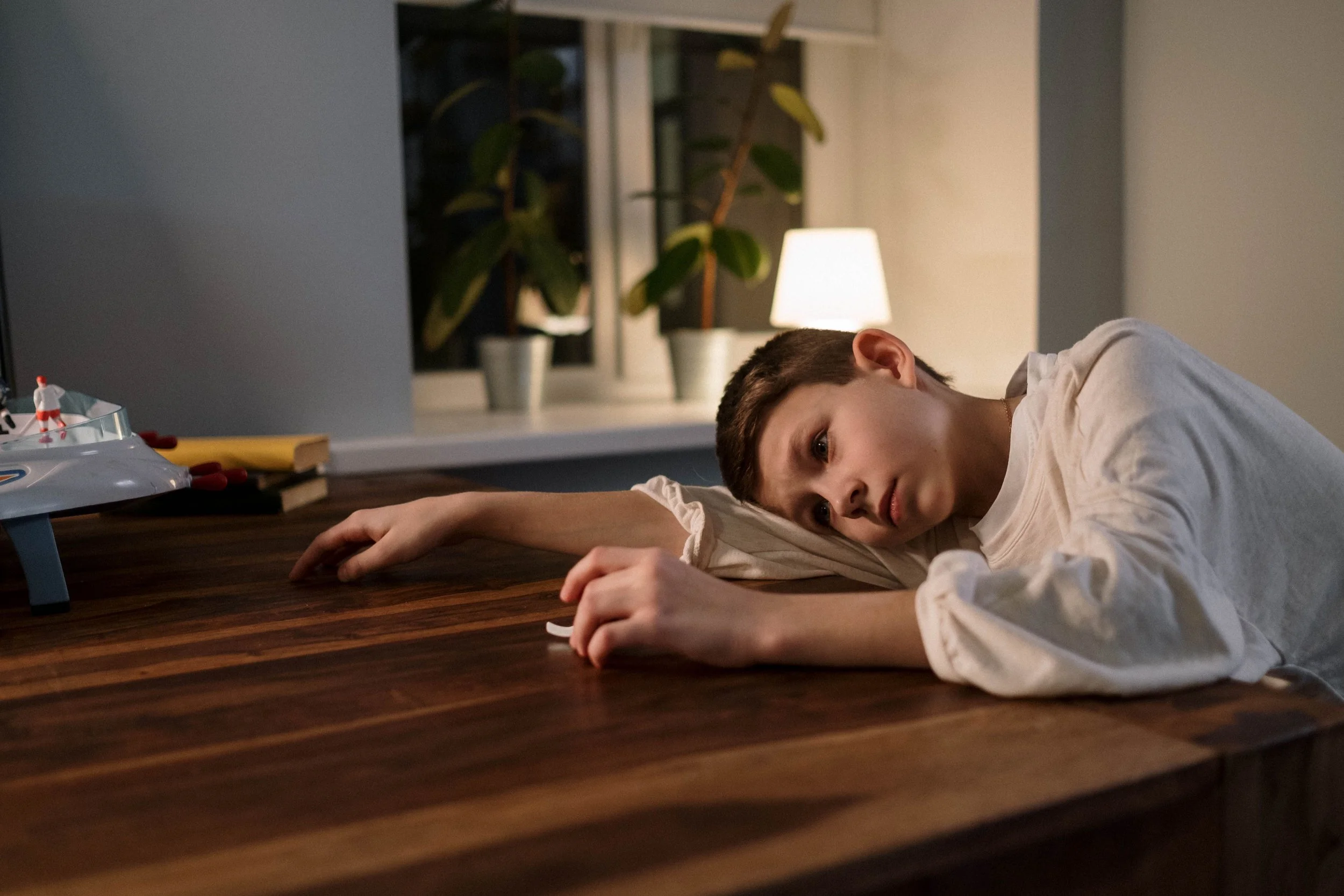
Hypoarousal signs: flat affect, slumped posture, blank stare, monosyllabic responses, withdrawal, dissociation, excessive sleep, numbness, or a sense that the child is "not really there."
Mixed states: some children oscillate quickly between the two, especially during high-stress moments such as transitions, conflict, or sensory overload.
In-window signs: curiosity, eye contact, playfulness, willingness to negotiate, ability to repair after rupture, and access to language for feelings.
Once you can recognize the state, you can match your response to what your child's nervous system actually needs in that moment, rather than what the situation might otherwise demand.



Practical Strategies to Support Regulation
Supporting your child's window of tolerance is not about preventing every dysregulating moment. That would be impossible, and it would rob your child of the chance to build resilience. The goal is to help them move back into their window when they leave it, and to gradually widen the window itself over time.
Here are six strategies adoptive families can practice at home.
1. Become a Steady Co-Regulator
Children borrow regulation from the adults around them long before they can manage it on their own. Your calm body, slow breathing, and grounded tone communicate safety in ways words cannot. When your child is dysregulated, your first job is not to fix the behavior. It is to bring your own nervous system into a steady state so theirs has something to lean on.
2. Adjust Your Response to the State
For hyperarousal, slow everything down. Lower your voice, reduce sensory input, and offer simple, predictable language. For hypoarousal, gentle activation can help. A soft touch on the shoulder, a warm drink, or a quiet walk outside can invite a child back into their body without overwhelming them. Matching your response to the state matters more than any specific technique.
3. Build a Predictable Environment
Predictability is one of the most underrated regulation tools. Consistent routines, clear transitions, and advance notice of changes all reduce the demands on a child's nervous system. Creating a home where the basics are reliable frees your child to use their energy for growth rather than vigilance. Our post on creating a safe space at home for adopted children offers concrete ideas for this work.
4. Use Sensory Tools Intentionally
Weighted blankets, fidget items, music, swinging, and rhythmic movement all engage the nervous system in helpful ways. Different children respond to different inputs, so observe what soothes your child and build a small toolkit of options. The therapeutic power of rhythm is explored further in our piece on the impact of music therapy in adoption.
5. Practice Repair After Rupture
You will not always respond perfectly. No parent does. What matters is the repair. When you lose your patience or misread a moment, return to your child later, name what happened, and reconnect. Repair teaches your child that relationships can survive hard moments, which slowly widens their window for future challenges.
6. Anticipate High-Demand Seasons
Some seasons stretch every family thin. Back-to-school weeks, holidays, anniversaries of placement, and major life transitions all narrow the window temporarily. Plan ahead by simplifying schedules, building in extra downtime, and increasing one-on-one connections. Our resource on managing anxiety during life transitions in adoptive families offers more guidance on navigating these stretches.
These practices compound over time. They do not produce overnight transformation, but they gradually shift the baseline of your family's regulation.
When to Seek Additional Support
Some children's windows are narrow enough that family-based strategies, while necessary, are not sufficient on their own. If your child experiences frequent or prolonged dysregulation, if their behavior is putting their safety or your family's stability at risk, or if you feel chronically exhausted and unsure how to keep going, it is time to expand your support team.
A trauma-informed therapist, a parent coach, or a coordinated team approach can offer specialized tools and accompaniment that single-handed parenting cannot provide. Parent Cooperative Community's wraparound services are designed precisely for families navigating these complex needs, and our broader program offerings include therapeutic environments where regulation skills are practiced in the community. Reaching out is not a sign of failure. It is a sign of attunement to what your family actually needs. Positive reinforcement and strengths-based approaches, explored in our post on the influence of positive reinforcement on adoptive parenting, often integrate well into a wraparound plan.
A Wider Window, One Day at a Time
The window of tolerance is not a fixed measurement. It can widen with time, with safe relationships, and with consistent experiences of being met where you are. Every moment of co-regulation, every steady response to a hard behavior, every gentle repair after a difficult day adds something to that widening. Your child's nervous system is learning, even when progress is invisible.
If you take only one idea from this post, let it be this: your presence is the most powerful regulator your child has. The skills, the tools, and the language all matter, but they live inside the larger gift of a caregiver who keeps showing up, breath by breath, day by day. That is the work, and it is enough.
At Parent Cooperative Community, we are dedicated to supporting adoptive families every step of the way. If you have any questions or need assistance, please reach out to us. Together, we can build loving and lasting family bonds. Contact us today to learn more!